mark@markspencer.studio
My Mockup
process
From Digital Direction to Direct execution. My process is built on the pursuit of efficiency. I believe the time spent at the easel should be focused entirely on the decisive application of paint to the panel. To achieve this, I utilize a rigorous pre-production phase to architect my vision before the first brushstroke is ever made.
I develop my references through a hybrid of modern and traditional tools—including digital and traditional drawing, photo apps, and AI generative tools—to explore lighting, mood, and composition. Having spent years mastering the fundamentals of traditional sketching and anatomy studies, I now use these advanced tools to "direct" my compositions. I can take an idea, initial sketch, or an old color study and use these tools to stress-test the concept and refine the compositional aspects. From there, I meticulously modify and re-render every element using digital apps until I have a complete, technical roadmap. The time spent making a quality reference is immeasurable. It is non-negotiable and pays dividends. It is a rare occurrence that I will abandon a painting due to poor subjects or composition in the reference stage. I give all my references a cooling off period to reset my eyes and reassess. Any changes I make from that point forward are carefully considered.
I embrace modern technology as a digital drafting table. There is truly "nothing new under the sun," and art history is a record of artists leveraging every available technology to expand their vision. They are just tools.
My living- studio #2
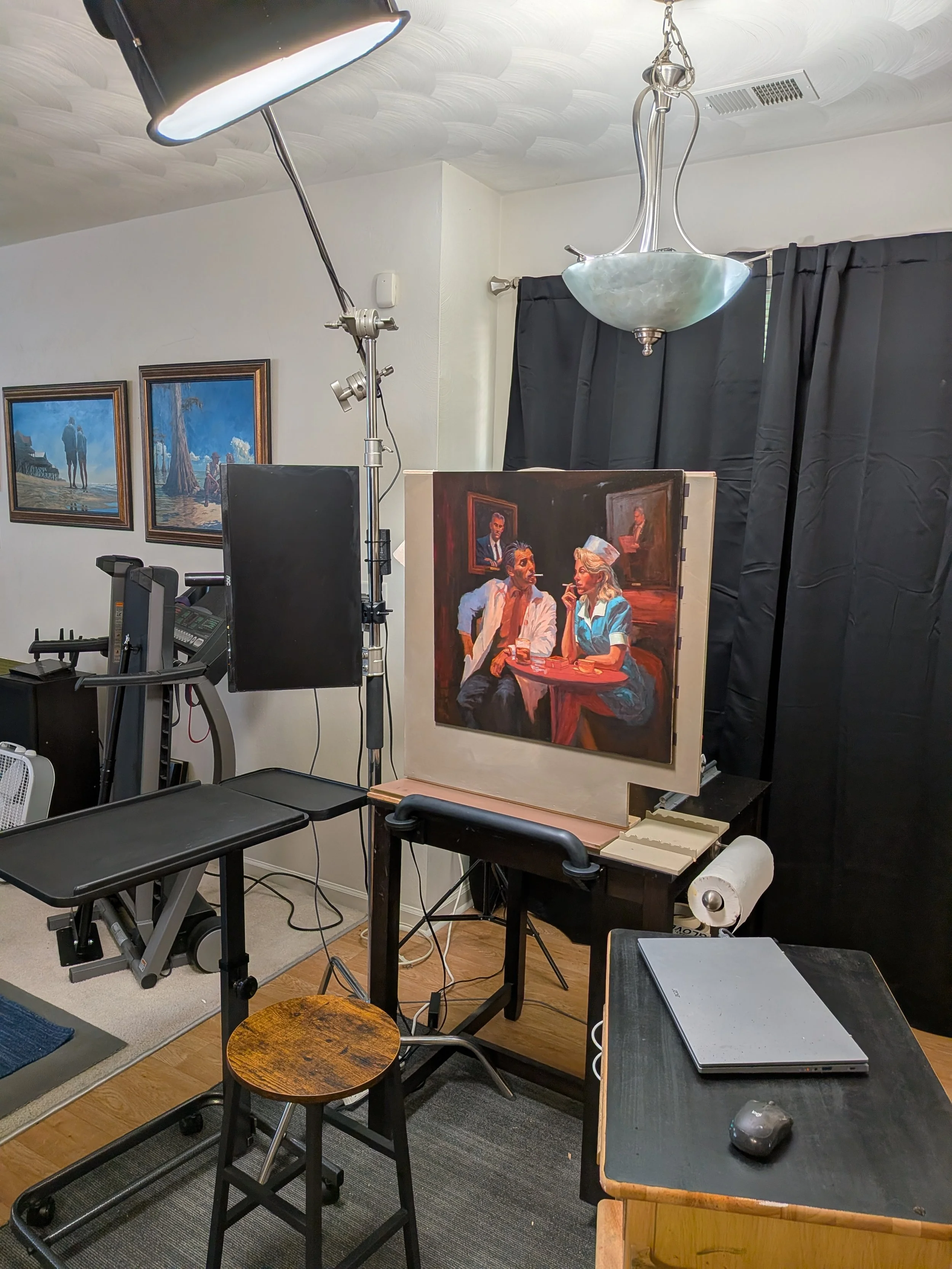
About a year ago I made the decision to create a second studio near my living area so I could make even an hour of painting; something that maximizes my time. Having 3-4 paintings running concurrently increases production and eliminates the fatigue associated with working the same piece each session.
The panels have thin sheets of steel temporarily mounted to their backfaces. The rows of 3M magnetic stripping can be seen to the right of this panel.
My Supports
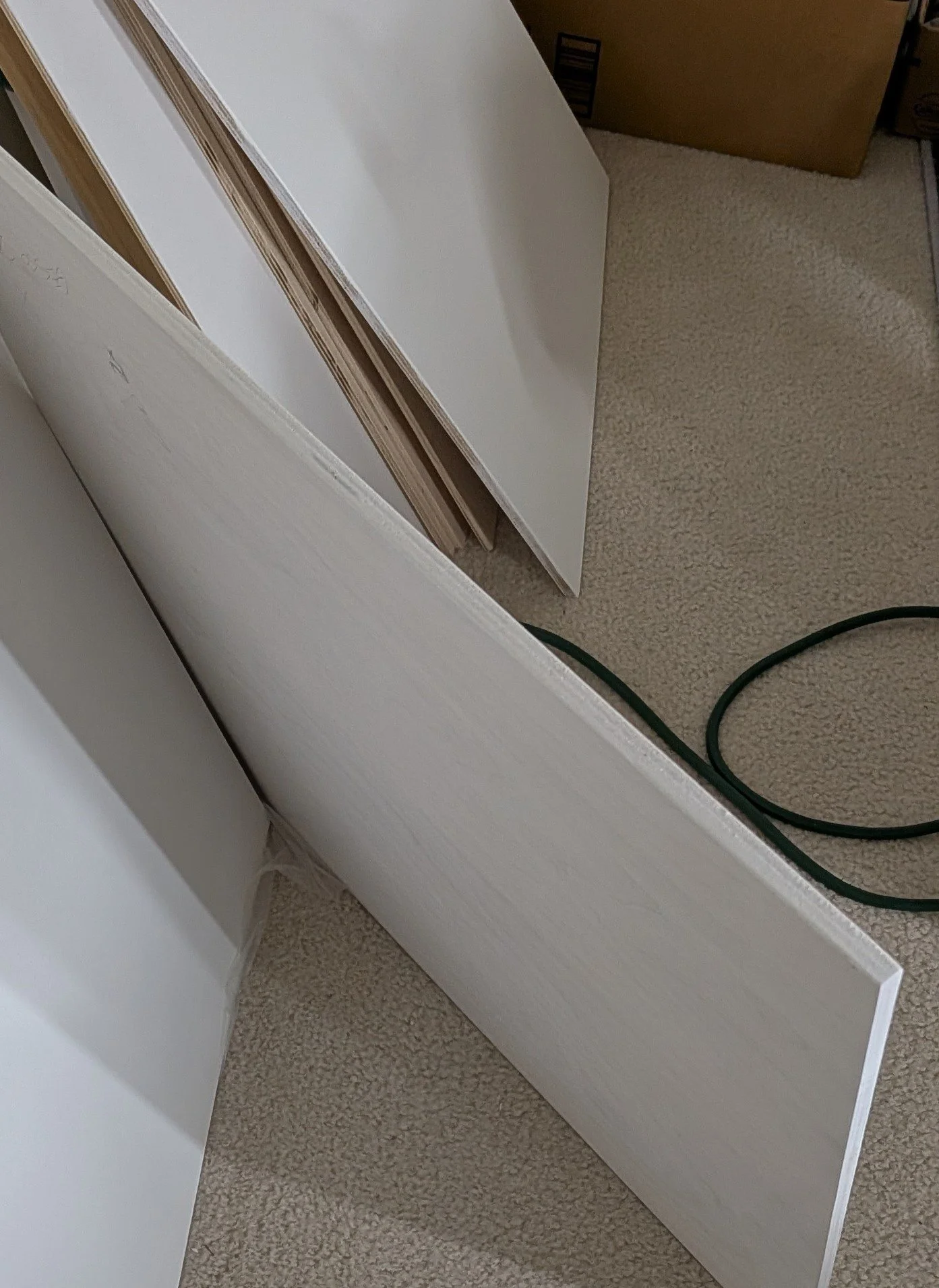
9mm panels being prepped.
The integrity of the painting starts with the support. I prefer painting on Lead Oil Grounds, which requires a rigid support, so my supports are primarily 6-9mm Baltic Birch (B/BB grade) or 6mm Aluminum Composite panels. They are prepared to a rigorous archival standard:
Triple-Sealed: Every Birch panel is triple-sealed on all six faces using GAC100 acrylic sealer to prevent moisture penetration, SIC, and ensure longevity.
The Ground: I apply 2-3 foundational coats of gesso, followed by either a final lead based ground (Natural Pigments brand), Alkyd based oil ground, or a specialized gesso layer along with 1-2 coats of Krylon acrylic matte to achieve the specific absorbency required for the piece. The final type and texture is predetermined for style and technique by using bristle brushes or foam rollers.
Alternative Supports: I also utilize Aluminum Composite panels (ACM), Ampersand tempered hardboard, and Centurion linen panels. Professional-grade gallery wrapped canvas, and cradled panels are for larger-scale works.
My oil paint brands are Tusc and Pine, Richeson, Williamsburg, and Windsor & Newton. On occasion, I will hand make small batches from dry pigment; (That’s a Zen thing mostly).
All paintings are varnished using Gamvar products.